
Video SEO in 2026: How YouTube and TikTok Build Real Search Authority
You thought video was just for explainers and AMAs? Think again.

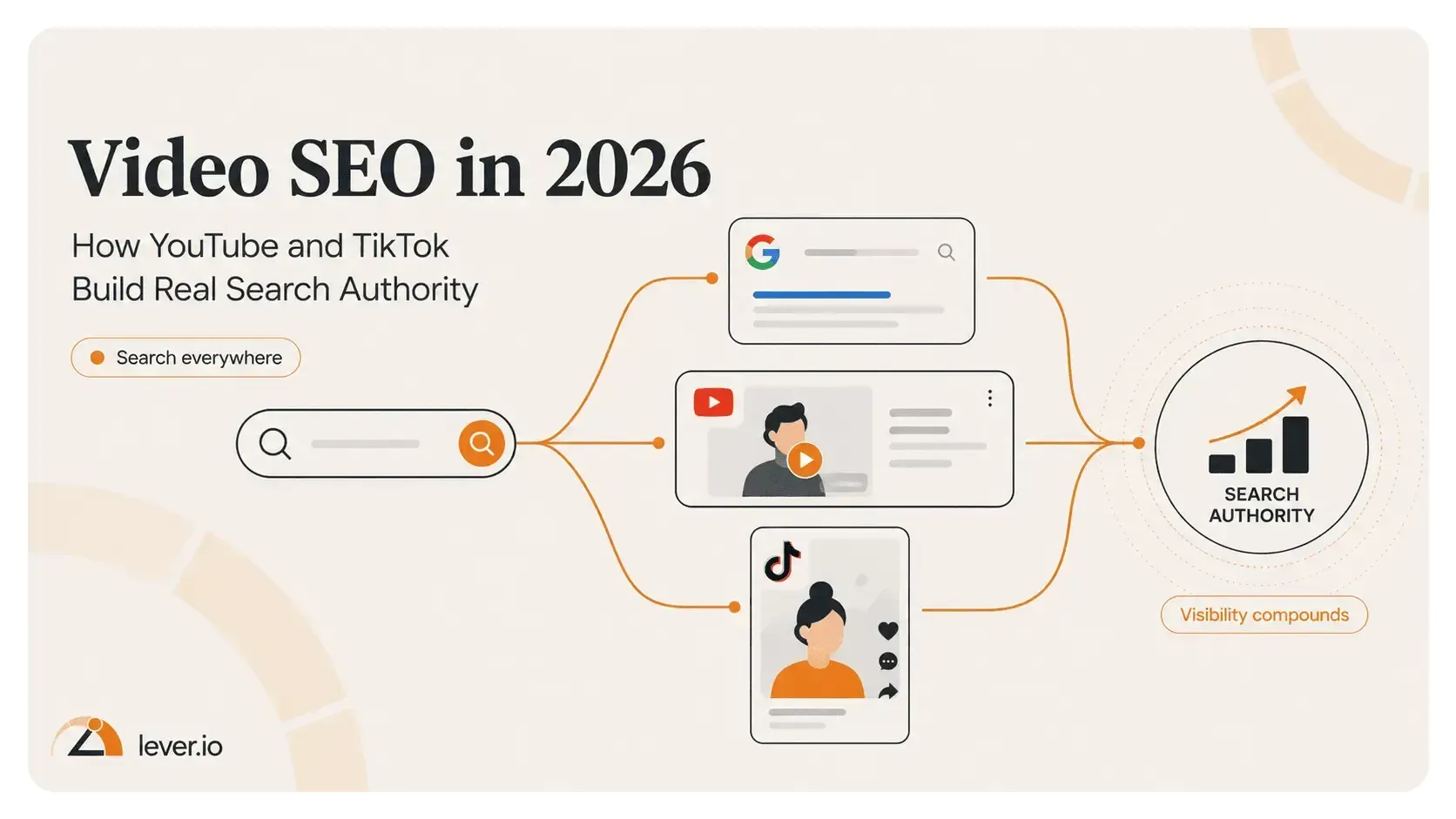
Search engines stopped being ten blue links a while ago:
- In 2026, Google, YouTube, and TikTok behave like answer engines that reward visual proof, buying intent, and watch time.
- If your brand is not showing up in video, you are losing the search battle before the text even loads.
- Video is no longer a nice-to-have on top of your SEO plan. It is the foundation.
Nowadays, search behavior is fragmented.
The same person looking for "best wallet for beginners" might type it into Google in the morning, search YouTube over lunch, and check TikTok before they commit.
They move between platforms based on what they want in that moment, not based on which app a marketer prefers. So visibility now depends on showing up across every platform at once, traditional search and social discovery alike.
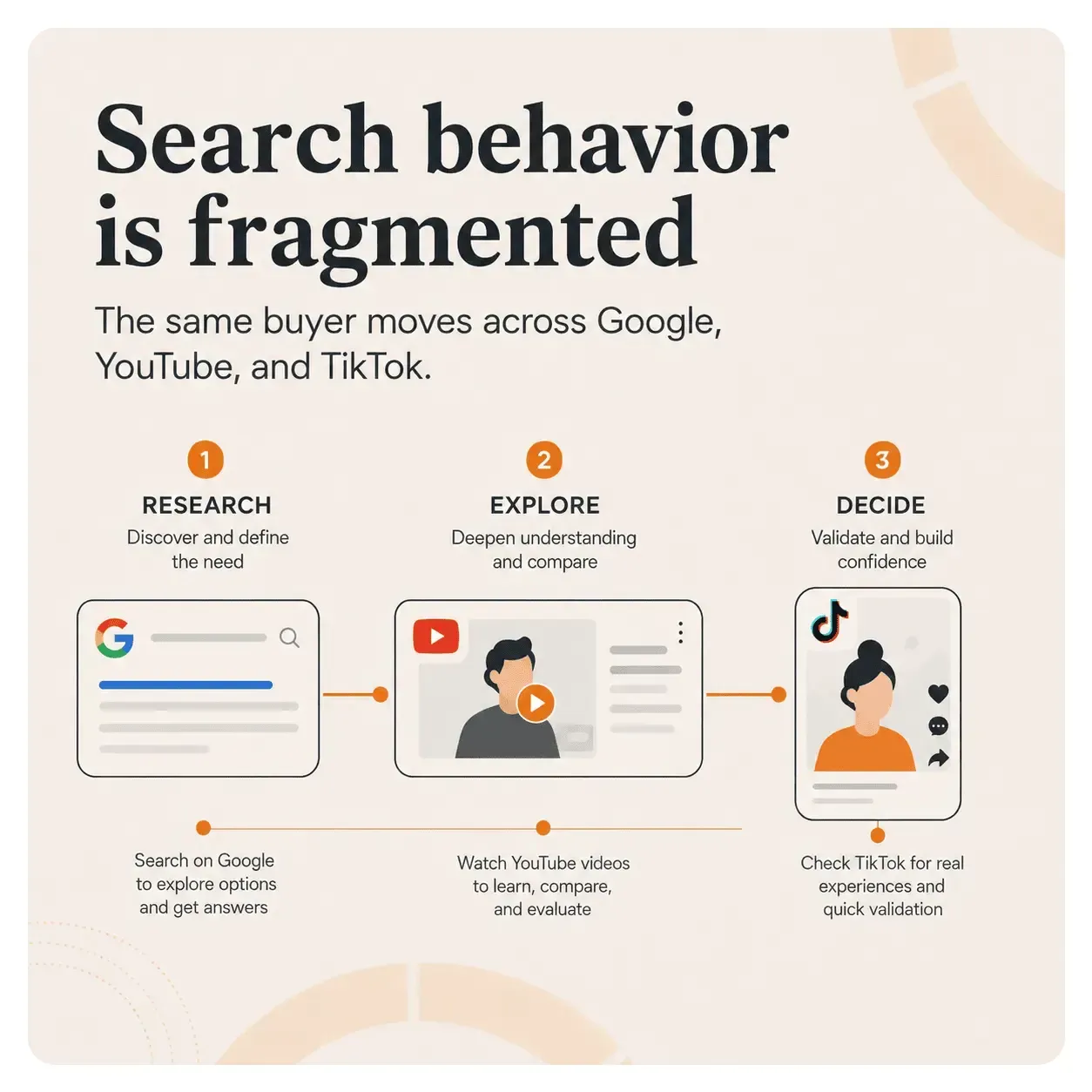
Here is exactly how YouTube and TikTok feed your organic search footprint, and how to use both without wasting budget.
How YouTube Videos Drive Traditional SEO
Google owns YouTube, and it shows.
The two platforms share a deep relationship, and Google does not treat YouTube like a random website it found on the open web. It gives YouTube preferential placement in the search results.
For brands fighting for attention, that preference is a shortcut. A few numbers make the case:
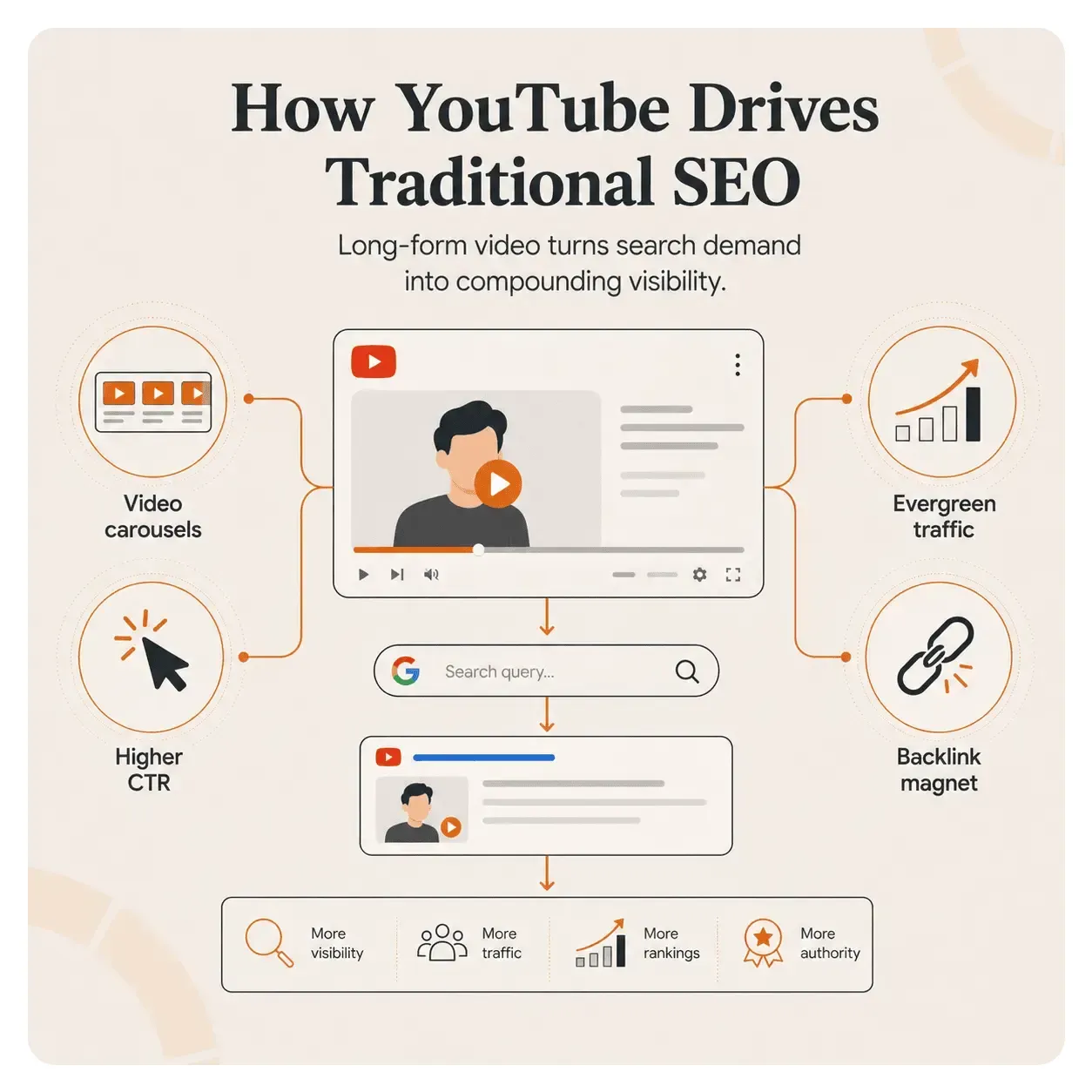
- YouTube dominates Google's SERP real estate. Roughly 62% of all Google search results pages now include video, and about 80% of those videos come straight from YouTube. Optimize a video for a specific query and you can sidestep the usual website ranking grind, landing a spot in Google's video carousels or featured snippets instead.
- Video rich results win the click. Video listings pull a 62% click-through rate on Google, which makes them far more effective at earning the click than a plain text result sitting next to them.
- YouTube content compounds. Most social posts die within hours. A well-optimized YouTube video keeps surfacing in search months or even years after you publish it, because steady search demand carries it rather than a fleeting algorithmic spike.
- Video is a backlink magnet. Pages built around video attract more inbound links than text-only posts; blogs that embed several videos earn over 50% more backlinks than those without. More links means more domain authority for your whole site, not just the page with the video on it.
For Web3 brands, YouTube is where authority gets built.
A clear ten-minute explainer that ranks for "how does staking work" keeps pulling in new audiences long after the campaign budget is spent.
That is the kind of asset a strong YouTube crypto KOL can produce for you, and the backbone of any serious crypto YouTube marketing program.
How TikTok Redefines Discovery Search
Most people still file TikTok under entertainment. However, that label is years out of date.
TikTok now works as a primary discovery engine, and for a large share of Gen Z and Millennials it is the first place they go for high-intent questions like "best software for X" or "how do I fix Y."
They are searching, not scrolling.
Google put a number on it with its own internal data: nearly 40% of young people now start a search on TikTok or Instagram rather than Google.
Three shifts make TikTok a real SEO channel and not a vanity play:
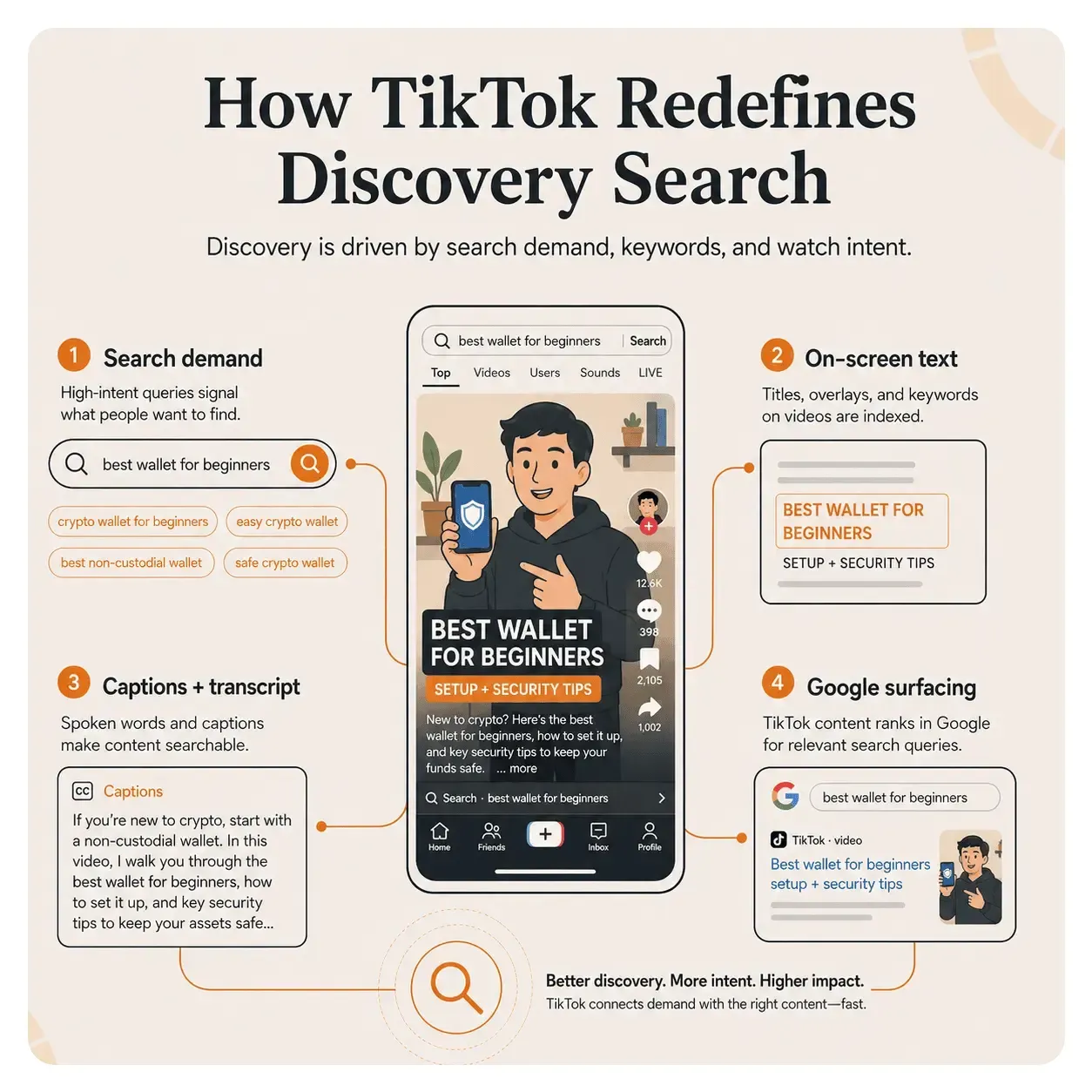
- Demand-led content, not trend guessing. With Creator Search Insights, TikTok now hands creators the actual search queries people type, plus the content gaps: topics with high search volume and low video supply. You stop guessing at trends and start answering proven demand directly.
- The "search everywhere" effect. TikTok's reach bleeds into Google. By early 2024, Google began surfacing TikTok clips directly in featured snippets and its AI results, and it now indexes and shows TikTok videos across its own results, especially on mobile and for localized queries. A strong TikTok presence can put you on Google's first page without winning the traditional web ranking fight at all.
- Keyword-driven reach. TikTok's algorithm works like a hybrid of social feed and search engine. It reads multimodal signals: the keywords in your caption, your hashtags, the text on screen, and the audio transcript. Optimize those elements and the algorithm files your video under the right topic, then serves it to people actively searching for that exact solution.
This is why a TikTok creator who knows how to write captions for search beats a bigger account that only chases sounds. Intent beats follower count, which is the same lesson that holds across every content creator archetype worth hiring. It is also what separates crypto TikTok marketing that ranks from posts that just chase a trending sound.
Strategic Alignment: Which Platform Does What
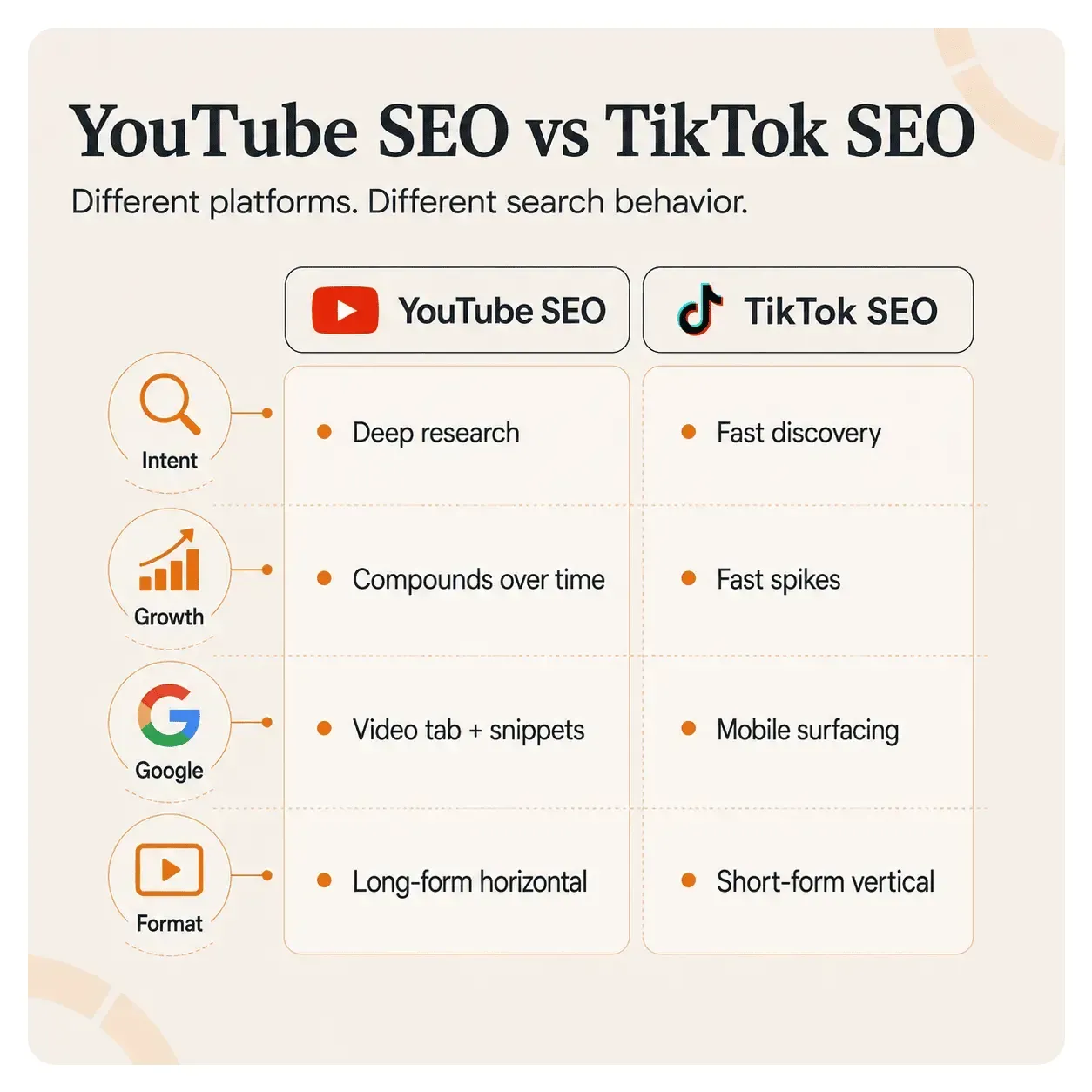
The mistake is treating these platforms as interchangeable. They serve different search behaviors and need different optimization. Use them for what each does best.
| Feature | YouTube SEO | TikTok SEO |
|---|---|---|
| Search intent | Deep research, detailed tutorials, high-consideration purchases | Fast discovery, instant inspiration, visual proof |
| Growth mechanism | Search-driven discoverability; views compound over time | Momentum-driven visibility; fast spikes through the algorithm |
| Google integration | Deep; dominates the Video tab and featured snippets | Growing; sometimes displaces YouTube in mobile results |
| Content format | Horizontal long-form, optimized chapters, clear timestamps | Vertical short-form, rapid hooks, keyword-heavy on-screen text |
Read the table as a sequencing plan, not a menu.
- Use YouTube for authoritative, long-term search dominance: the explainers and walkthroughs that own a query for years.
- Use TikTok to capture fast, high-intent discovery the moment someone goes looking.
- Run both and you surround the searcher at every stage of the buying journey, from the first curious question to the final decision.
What This Means for Your 2026 Strategy
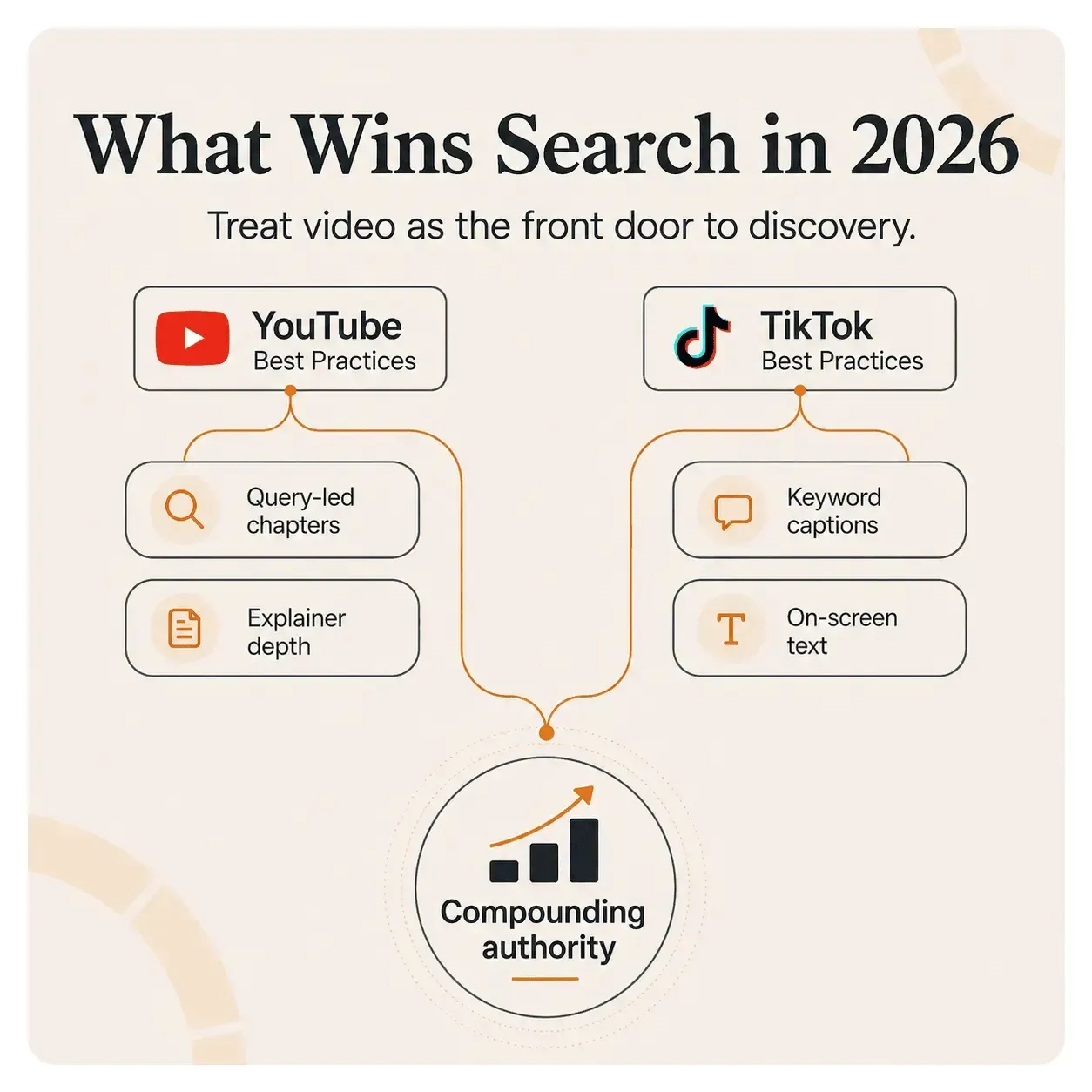
The brands that win search in 2026 will not be the ones publishing the most blog posts.
They will be the ones who treat video as the front door to discovery and pair the right format with the right intent:
That takes creators who understand search, not just camera presence.
- A YouTube partner who structures chapters around real queries.
- A TikTok creator who writes captions and on-screen text the algorithm can actually read.
- Get those two working together and your search footprint stops depending on a single channel you do not control.
This is the work Lever.io was built for: a creator-led Web3 marketing agency that matches brands with vetted YouTube and TikTok partners who turn a video into a ranking asset, then measures what audiences actually do across platforms instead of guessing.