
Case Study: 240,000 Impressions, 29 New Users, and the Part of the Funnel KOL Marketing Can't Fix
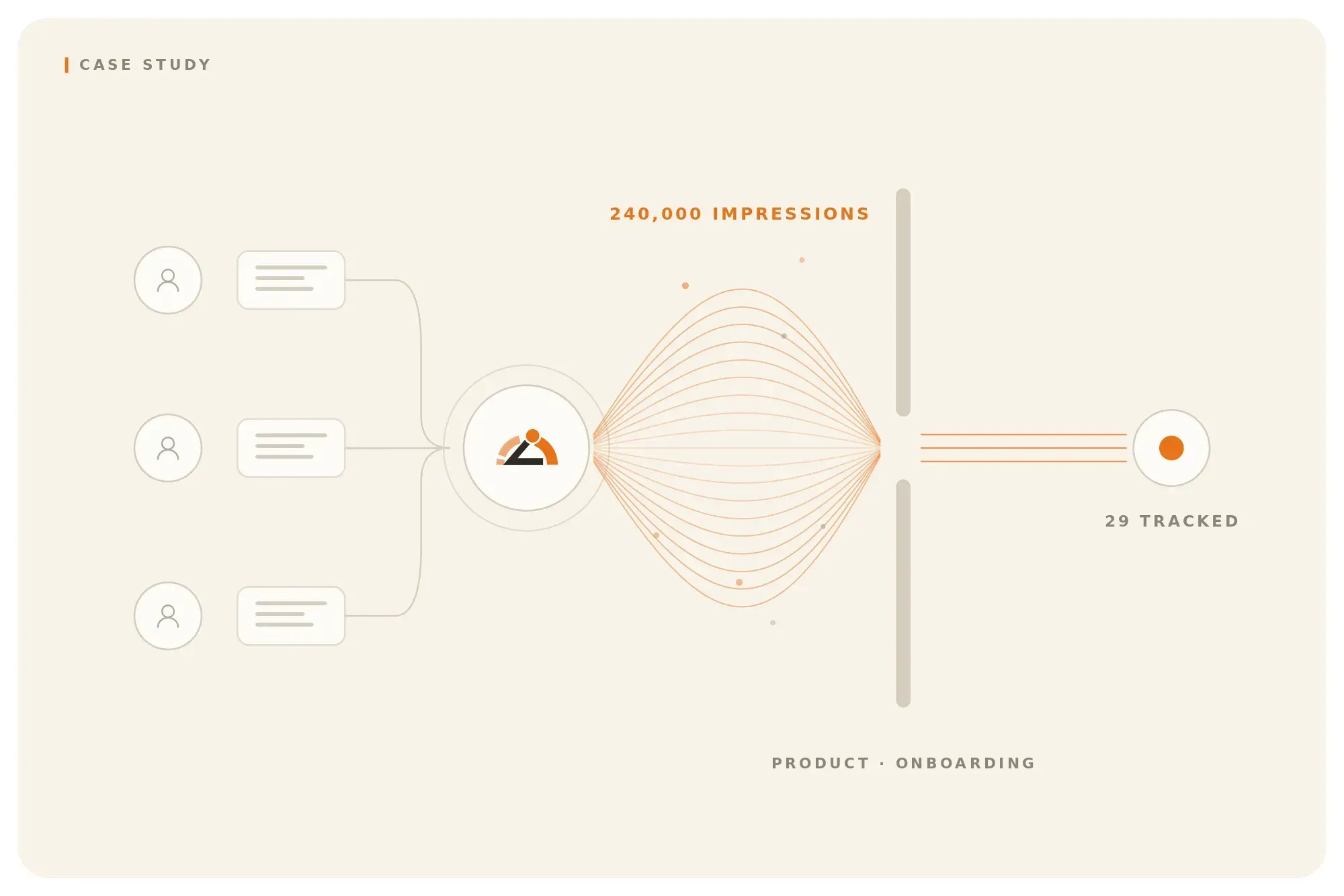
We ran 35 creators for a prediction market app during the biggest month its category has ever had. The dashboard reported 29 signups. Those 29 got no discount, no rebate, and no points. Here is what that number is actually telling you.

Editor's note, August 5, 2026: An earlier version of this piece described 26,522 views as the campaign's top-performing creator post, set against a field "that mostly lived around 1,700." That was a misreading of our own delivery report.
Those two numbers are a before-and-after on the client's own account: 1,700 was their peak pre-campaign post in May, and 26,522 was their peak during the campaign window, representing a 15.6x lift on the channel they own.
The top creator post was 20,418 views, against a field mostly in the low thousands. We got the labels wrong.
A prediction market app came to us with three weeks until the World Cup.
We shipped 35 creators, more than 40 pieces of content, and 240,000 impressions + 47,000 views on a budget that would embarrass most agency retainers.
Their spreadsheet reported 29 signups from the invite codes they provided.
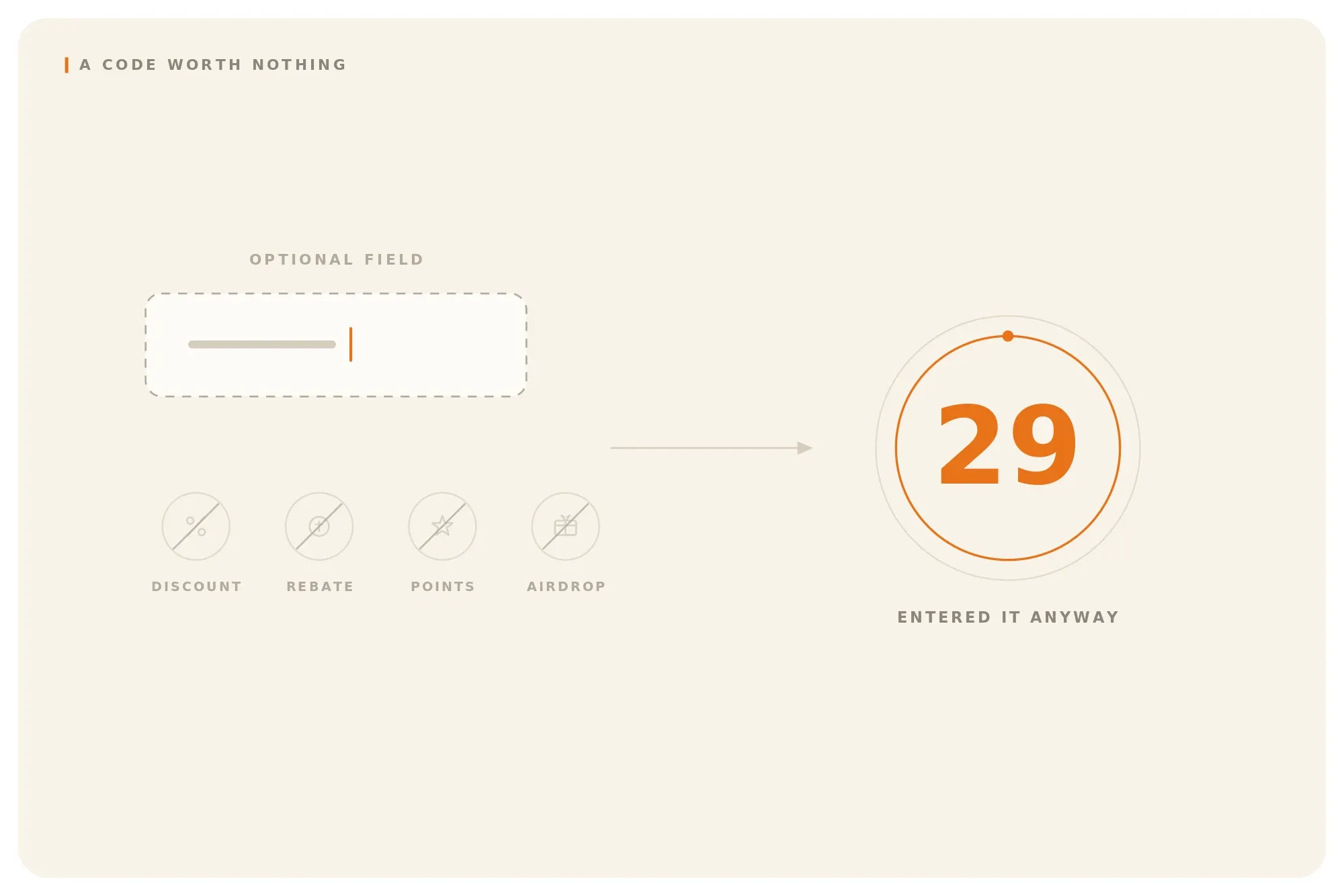
Here's the rub: those 29 new users got nothing for using the codes KOLs provided in their videos and tweets.
- No discount.
- No fee rebate.
- The code itself carried zero upside. However, twenty-nine people typed it into an onboarding form and connected their wallets because a creator they follow told them to, and for no other reason.
And the client wasn't happy with the results.
Usually you want case studies to show off your hits. This time round, we'll look at a campaign that didn't hit a home run—at least, from the client's POV.
We've anonymized the client, the creator handles, and the post links. The campaign figures come from the delivery report. The market figures are public.
The Setup: A New App, a Global Event, Three Weeks
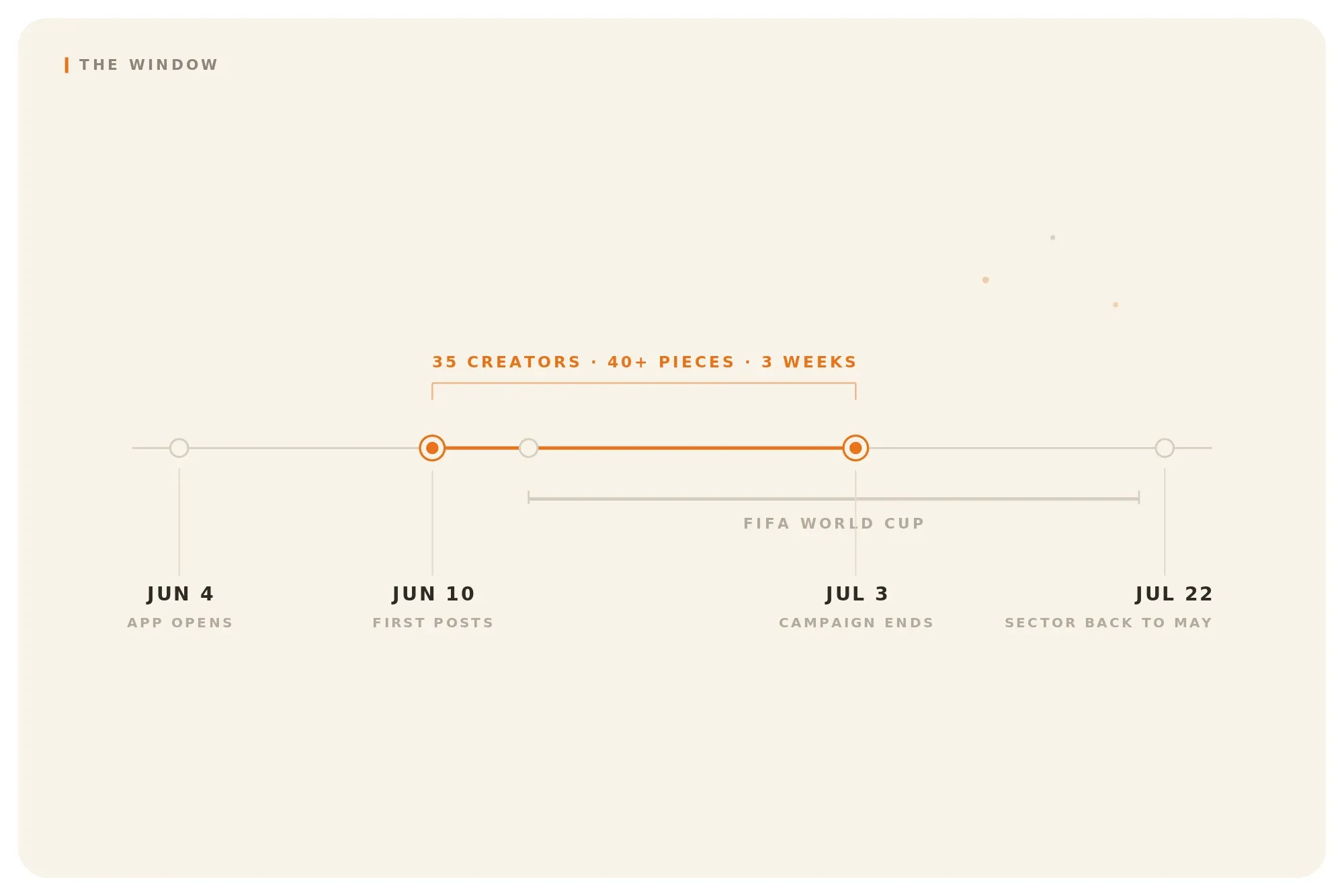
The client opened to the public in early June with a few million dollars of beta volume behind it.
Nine days later the FIFA World Cup kicked off, and prediction markets had the largest month the sector has ever recorded.
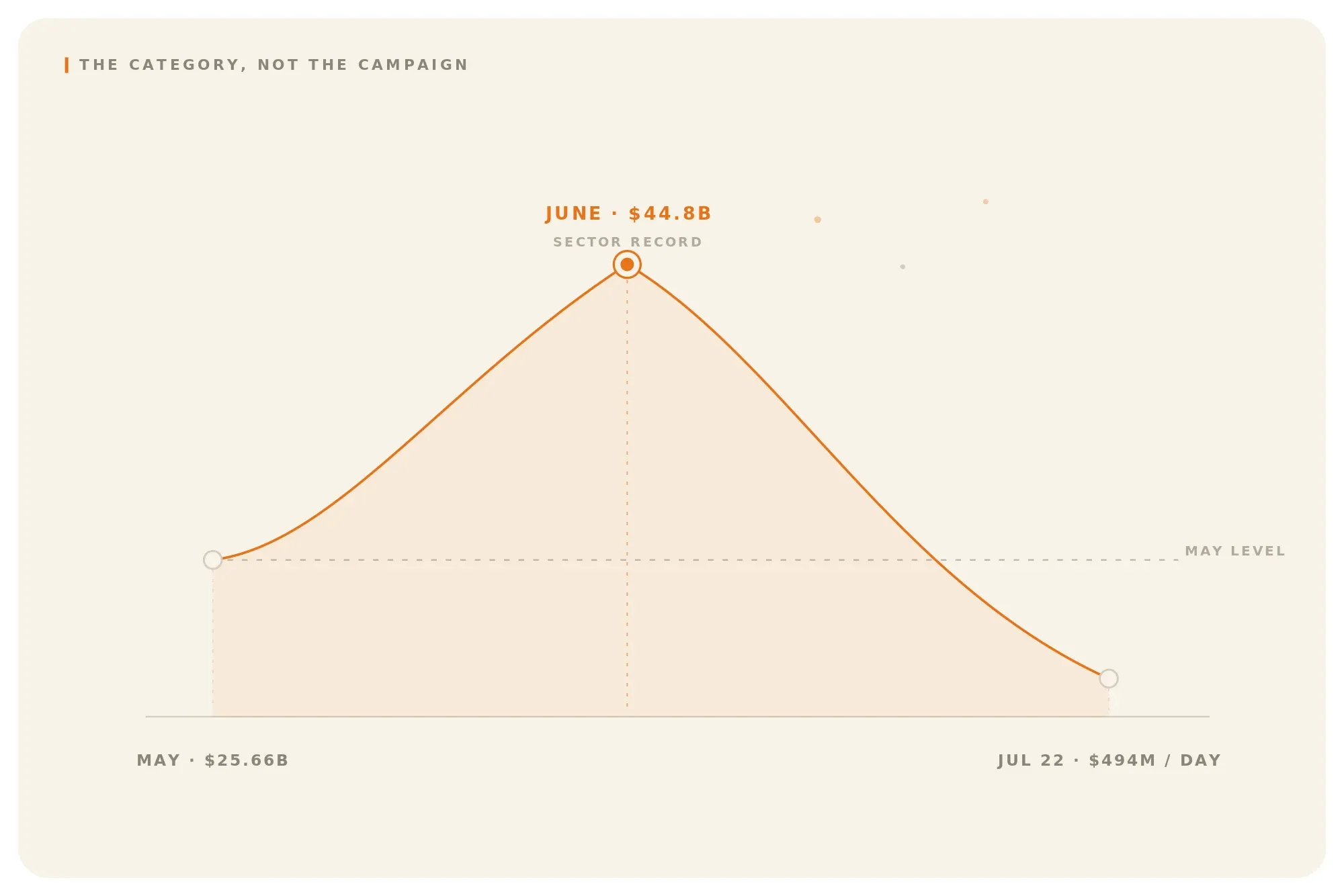
Combined volume across Kalshi, Polymarket, and Polymarket US reached $44.8 billion in June, up 75% from May's $25.66 billion. Kalshi alone did $31.5 billion of World Cup era volume.
So: a brand-new app standing in front of the biggest liquidity event its category has ever seen, with a tournament-length window to become a name people recognized.
The client wanted reach, and they wanted it inside three weeks.
That timeline rules out a slow brand build for a prediction market campaign, and instead the operation was closer to a token launch push than crafting a quarterly content calendar.
Our End: What Lever Shipped in Under Three Weeks
The campaign ran June 10 to July 3. Inside that window:
- 35+ creators activated across Crypto Twitter and TikTok, each with a brief written for their audience rather than one master brief copy-pasted 35 times.
- 40+ pieces of content shipped, sequenced against the tournament calendar so the volume landed when the sport did.
- 240,000 impressions and 47,000 views.
- Top-performing creator post: 20,418 views.
- Client's own peak post: 1,700 → 26,522 views (May vs. campaign window).
Every creator was held accountable for drafts and verified live posts, and the campaign roster was screened for fake engagement.
Assembling a vetted roster that size on a tournament clock is the part teams underestimate every time.
It is dozens of hours of sourcing, negotiating, briefing, chasing, and verifying, and it is most of what a campaign manager does during a sprint.
And when the client asked their Campaign Manager to pivot mid-campaign and deviate from Lever's original plan, the CM obliged.
In hindsight, around Step 3 is when things went pear-shaped, and this is where Lever could have pushed back:
- The client wanted a video-heavy campaign
- Lever prepares (takes time) and delivers a video-heavy campaign
- The client wants to nix video and go 100% tweets
- Lever puts aside hours of work readying briefs and video creators, loses good faith with video creators waiting to get the greenlight to produce, and the content machine is steered towards the client's demands.
- Client isn't happy with what they asked for and get.
When 29 Codes Just Aren't Enough
Twenty-nine new users.
Not 29 thousand. Twenty-nine people.
If you've run a creator campaign in crypto you know the meeting that follows.
Someone opens the analytics tab, finds a number two orders of magnitude below the reach figure, and the room decides the campaign didn't work.
We'd like to argue the opposite.
Twenty-nine people took an optional extra step, because someone they trust said to.
Trust is the expensive thing.
Almost nobody can get a stranger to do unpaid busywork on your behalf, which is the entire reason creators outperform ad units in this industry.
If 29 people complied for nothing, the number who arrived, looked around, and signed up without ever touching the code is much larger.
We can't tell you how much larger, and we'll come back to why.
The Code Was Friction We Added Ourselves
Here's the uncomfortable half of that finding:
- A promo code is a field.
- Fields cost you users.
- Every extra input between intent and account is a place where a percentage of people close the tab.
In exchange for a tracking number we knew would undercount, we added a step to the onboarding of a product whose entire pitch was speed.
That trade is worth making only when the code is doing real work, which means carrying a direct incentive.
It only counts the users who saw the content, arrived, and chose to complete an optional field with no upside.
Attribution is still one of the hardest parts of all marketing!
Before We Take Credit for Anything
This is where a case study normally starts overclaiming. We're going to stop short of it on purpose.
The category we were marketing went vertical during our campaign window.
It would be easy to put the volume chart next to the campaign chart and let the reader draw a line between them.
We won't, because the World Cup is the more plausible explanation and everyone reading this knows it.
Then the tournament ended and the honest version got clearer.
By July 22, daily volume across the sector had fallen to roughly $494 million, under the May daily average.
Polymarket's daily activity dropped about 40%, predict.fun about 36%, Kalshi about 9%.
The surge was a tournament. The fade was the tournament ending. Neither one tells you anything about 35 creators and 40 pieces of content.
Grading the campaign on the category's volume would have been dishonest. Grading it on 29 was wrong in the opposite direction.
Both mistakes come from the same habit of scoring a campaign on a number the campaign does not control.
Marketing Anecdote: A Dentist in Delray Beach
One of our team came to Lever from a local SEO shop in South Florida. He tells this story better than we're about to:
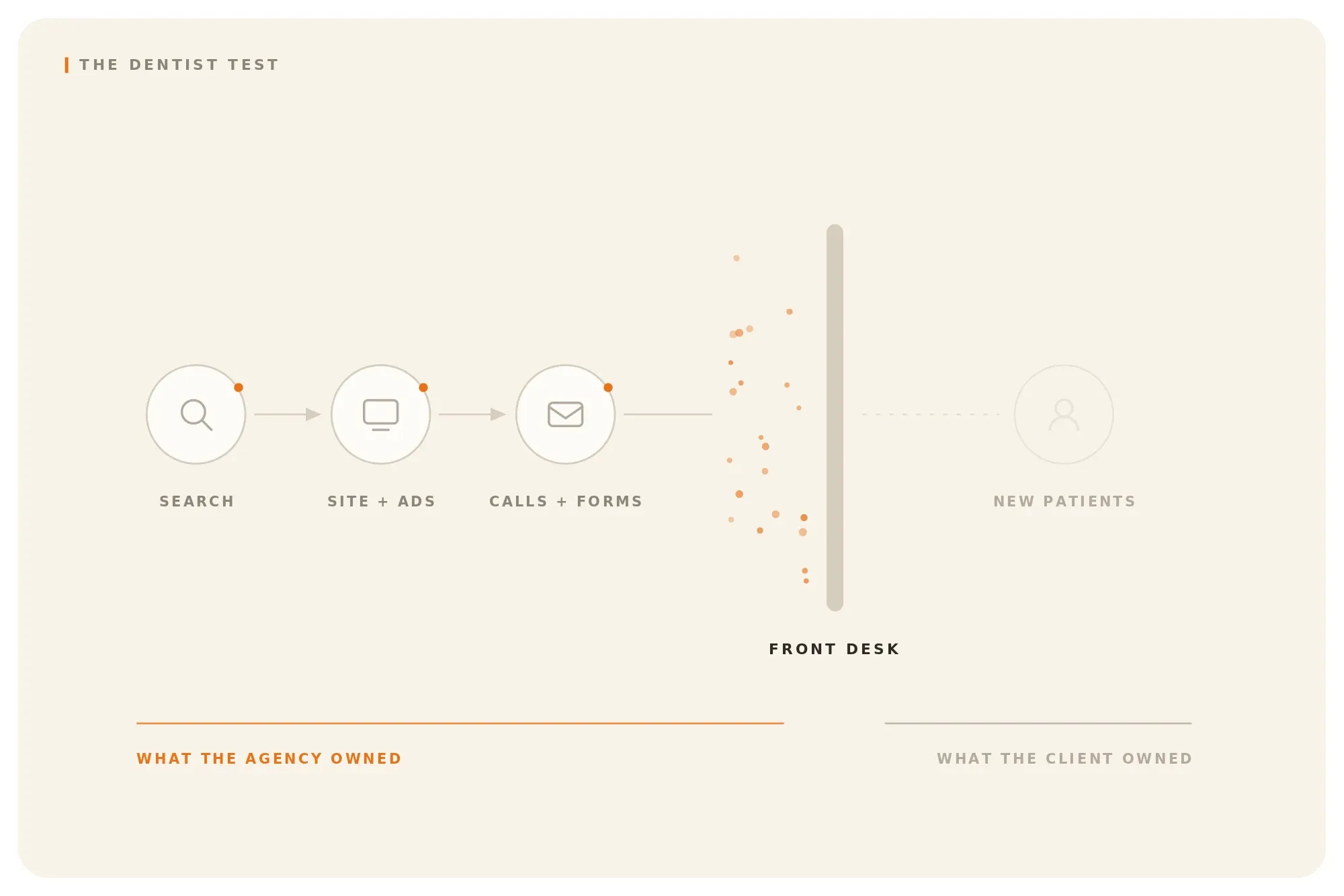
They walked into the office one morning and the boss played the team a voicemail. It sounded like a man who had been drinking since dinner, ranting at ten at night. It was a client. A dentist, three months into a site overhaul, consistent blogging, and managed Google Ads, furious that he had no new patients and done waiting.
Three months is early to be shouting about SEO results. The ads, though, were a different story. They were being A/B tested and they were producing clicks, and the calls and forms tracked through Twilio were arriving at a much higher rate than before the engagement started. The top of the funnel was in good shape.
So they dogfooded it. They pretended to be patients. A toothache. A broken tooth. Someone due for a cleaning. Searched "toothache dentist Delray Beach," found the practice, found the contact form, found the phone number. All of it worked.
Then they called, and got the voice machine. Called again. Voice machine. Submitted forms and got no reply, ever. He kept calling, wondering what he would actually do if he had a broken tooth and needed a dentist that afternoon, until finally a human picked up and answered with an angry "HELLO?" and nothing else. He had to ask whether he had even reached the right office.
The practice was getting up to 18 form submissions a day. The receptionist had decided they were spam and was deleting them. The only inquiries anybody at that office replied to were the ones from people who copied the dentist's email address and wrote in directly.
The marketing worked.
The front desk was the bottleneck.
And the SEO shop was the one getting the angry voicemail.
Where Crypto Campaigns Hit the Same Front Desk
Swap the receptionist for a product and this is most of what we see.
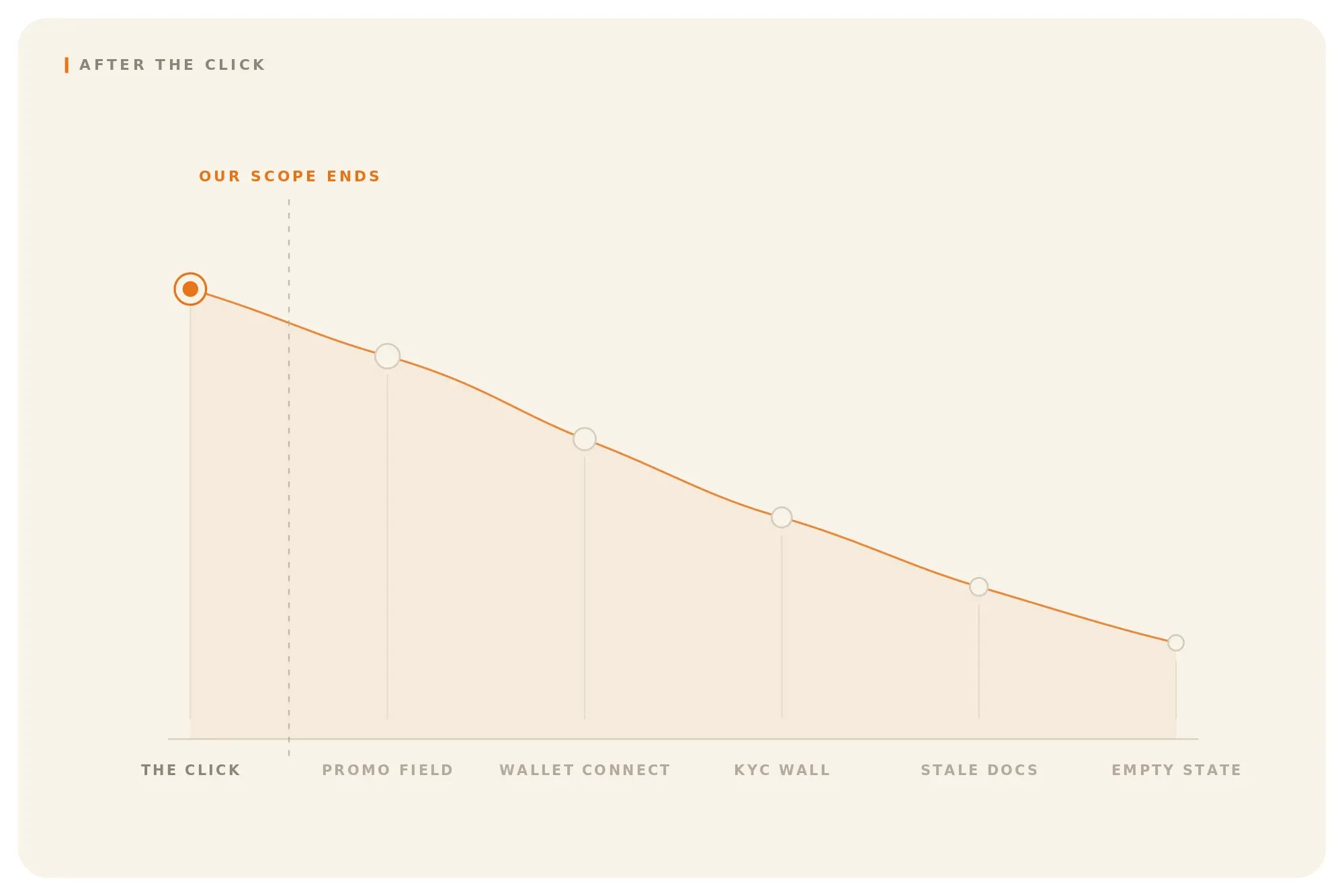
A viewer watches a creator explain a protocol, gets interested, and clicks.
Then the wallet connect fails on mobile browsers.
Or a KYC wall appears before anyone can look at a single market.
Or the docs describe an interface that was redesigned in March.
Or no one from the team responds after a user joins their Discord.
It goes on and on.
Every one of those is a front desk deleting the forms.
You can't spend your way through it. Doubling the creator budget just sends twice as many people into the same wall, which is the fastest way to burn a campaign and a roster's goodwill at the same time.
This is the real reason we publish a budget floor and get specific about what goes wrong when projects hire creators badly: spending more only helps when the thing you're spending into is ready to receive people.
The honest division of labor looks like this. Getting attention from audiences predisposed to want your product is our job.
What happens in the ninety seconds after the click is yours.
When the second part is broken, no amount of the first part fixes it, and the marketing partner is usually the one who gets the call.
The Other Number Worth Keeping
One creator post did 20,418 views. Most of the field landed in the low thousands, and the weakest came in under 200.
That's a hundredfold spread across a roster that was vetted before anyone got briefed, and it has nothing to do with follower counts.
It's View Velocity doing its job, separating the creators genuinely being watched this week from the ones posting into a void. That one post tells you the format, the framing, and the creator to buy more of next month.
The client's own account moved too. Their peak post went from 1,700 views in May to 26,522 during the campaign window, which is a 15.6x lift on a channel they already owned, driven by content they didn't have to make.
Both are measurable within a day, both require nothing from the viewer, and neither cares whether the client's onboarding is any good.
Leading indicators beat lagging ones, especially when the lagging one runs through somebody else's product.
More About What Lever Can Do For Your Project
Lever is a media company. We remove the dozens of hours of sourcing, negotiating, coordinating, briefing, and verifying that stand between a project and a coherent multi-platform campaign, and we put your product in front of audiences already inclined to want it.
On this campaign that produced 240,000 impressions for a fraction of what most teams assume that costs.
 Lever.io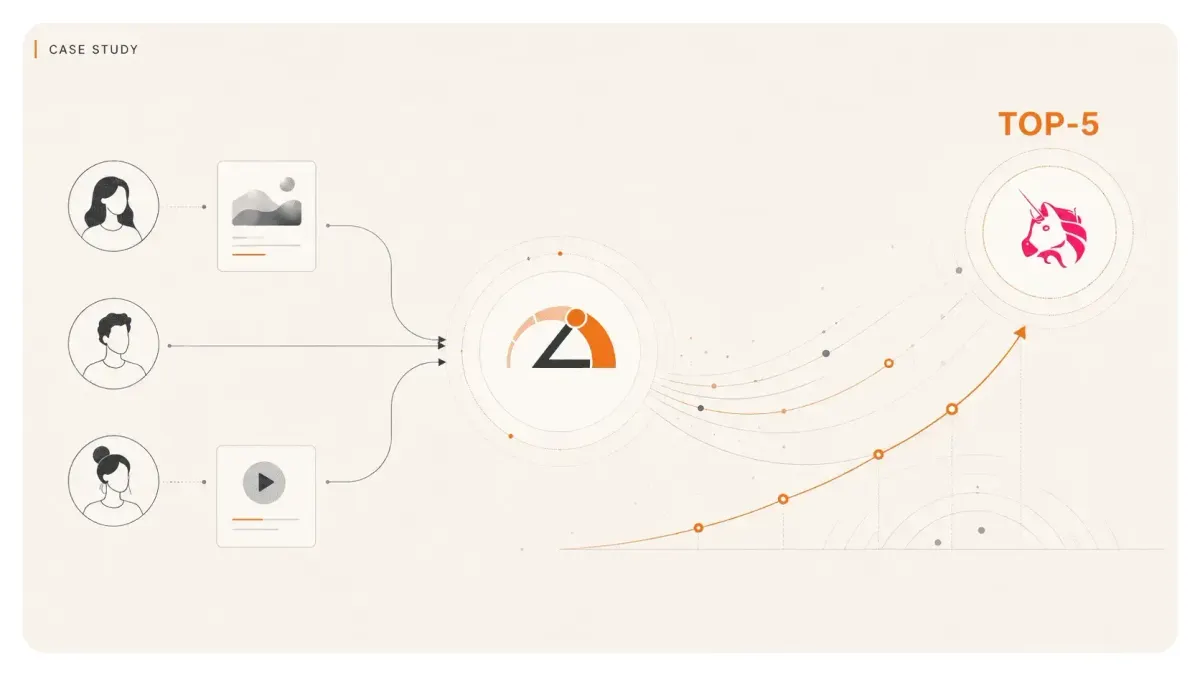
When the funnel behind the click is solid, this is what the same machinery does: our RWA token sale sprint pointed 75 creators at a single on-chain auction and the sale finished among the top five Uniswap has ever run. Same process, an endpoint that was ready to receive people.
We also help with the part after the click more often than people expect.
Grove is the clearest example. Working with Lever's creator distribution, Arthur Sabinstev's team tested two different value propositions in a single month and found that one of them, a Chrome extension, carried too much friction to gain traction. They killed it and doubled down on the other.
That's the whole Grove story, and the useful part is that the finding was about product friction, surfaced by putting real users in front of the thing quickly.
Real audience feedback arriving daily is worth more than another quarter of guessing, whether you're an early-stage project or a team preparing a launch.
- Sometimes that feedback is "people love this."
- Sometimes it's "nobody can finish signing up on a phone."
- Both are worth knowing in week one instead of month nine.
What we can't do is fix the bottleneck for you. If people are arriving and not converting, and the top of the funnel is demonstrably working, the answer is inside your product.
We'll tell you that plainly, which is a nicer outcome than the alternative where everyone blames the creators and runs the same campaign again with a bigger budget.
Planning Something on a Deadline?
If you're launching into an event window, a listing, or a TGE, the funnel conversation belongs in the same meeting as the creator list.
Talk to us about your campaign and we'll build the plan around your date, tell you which platforms are worth sequencing for your product, and walk your onboarding flow before we brief a single creator.
If we spot the front desk problem early, you get to fix it while the content is still in production.
You'll talk to the people who would actually run it, and get a straight answer about what three weeks can and cannot do.
The campaign filled the waiting room. Somebody still has to answer the phone.