
X's New Location Feature: A Double-Edged Sword for Transparency and Marketing in the Web3 Era?
X's controversial location feature briefly exposed foreign influence, MAGA bots, and fake crypto KOLs, igniting a global debate. Was this radical transparency a vital step against misinformation, or a reckless act of "mass-doxing" that threatens vulnerable users?

In late November 2025, X (formerly Twitter) rolled out a controversial new feature designed to enhance user transparency: the "About this account" section displaying a user's approximate country of origin, VPN usage indicators, and username change history.
This update aims to peel back the curtain on account authenticity in an era plagued by misinformation and bots.
However, the feature's debut sparked immediate global headlines, exposing foreign-operated political accounts and igniting debates over privacy versus accountability.
In this deep dive from Lever, we'll take a look at why the location feature was introduced, the criticism it's received from the X ecosystem, and some of the impact it has already had on a global scale with a specific focus on crypto and Web3 marketing.
Why Was the Location Feature Introduced?
X's leadership, under Elon Musk, positioned the location transparency tool as a critical step toward combating platform manipulation.
By revealing a user's country, derived from IP addresses, device data, and other signals, the feature seeks to help users spot inauthentic accounts, such as those run by foreign entities pushing agendas or spam bots masquerading as locals.
Musk and X executives have long emphasized the platform's role in fostering "truth" and reducing deception, especially in politically charged environments.
For instance, the tool includes VPN detection, flagging accounts that might be hiding their true origins, which aligns with broader efforts to curb coordinated disinformation campaigns.
The rollout comes amid growing concerns about state-sponsored influence operations. In the U.S., it quickly highlighted pro-Trump (MAGA) accounts operating from outside the country, raising questions about their authenticity and potential foreign interference.
Globally, similar exposures occurred, such as Iranian regime-linked profiles using privileged, unfiltered internet access to pose as opposition voices. X clarified that the data isn't always precise and can be spoofed, but the intent is clear: to empower users with more context for evaluating content credibility.
The Backlash: Privacy Concerns and Unintended Exposures
While some users celebrated the feature for unmasking "liars, frauds, and scammers," the response was overwhelmingly negative, with widespread backlash over privacy invasions and safety risks.
Critics argued it amounts to "mass-doxing," potentially endangering vulnerable groups like LGBTQ+ individuals in repressive countries, journalists, or activists who rely on anonymity. For example, queer and trans users expressed fears that revealing locations could lead to persecution in hostile regions.
The feature's buggy rollout exacerbated the outcry. It was live for only about 20 minutes before being pulled due to inaccuracies, yet in that brief window, it fueled racism, harassment, and jingoistic attacks.
How is this not mass-doxing of user locations? Instead, X users should have a private geofilter that lets them control which parts of the world show up on the timeline. This wouldn’t prevent use of VPNs to spoof location though. Showing account location should be optional. pic.twitter.com/ACv1bS633M
— ✠ 𝔅𝔞𝔯𝔬𝔫 𝔳𝔬𝔫 ℜ𝔦𝔱𝔱𝔢𝔫𝔥𝔞𝔲𝔰 (@husafell_stone) October 14, 2025
Accounts were weaponized against those discussing sensitive topics like Palestine, and users in fields like crypto worried about targeted crimes such as kidnappings. Even Ethereum co-founder Vitalik Buterin called it "risky," highlighting privacy concerns in the crypto community.
Former X employees revealed the idea had been rejected multiple times pre-Musk due to spoofing vulnerabilities and potential backfire.
On the flip side, the feature delivered on its promise in some areas. It exposed Scottish separatists tweeting from Iran, Irish Republicans from the UK, and regime-backed Iranian bots posing as anti-monarchy voices.
Must admit, the new location feature on X is genius. Scottish Separatists tweeting from Iran. Irish Republicans tweeting from the UK (and anywhere but Ireland). All liars. We knew it! Well done @elonmusk
— Philip UK 🇬🇧🇮🇱 (@philip129) November 25, 2025
In Iran, it revealed pro-regime accounts using "white SIM" cards, unrestricted internet reserved for elites, while ordinary citizens must use VPNs, underscoring state hypocrisy. Russian bots and fake U.S. political influencers were also called out, with some accounts deactivating post-exposure.
Why It Matters for Marketing: Verifying KOLs in a Fake-Filled World
Beyond politics, the location feature has profound implications for digital marketing, particularly when hiring Key Opinion Leaders (KOLs) or influencers.
In an ecosystem where authenticity drives engagement, brands can now cross-verify claims about an influencer's base, ensuring alignment with target audiences.
 Lever.io
For instance, a U.S.-focused campaign might avoid KOLs revealed to be operating from abroad, reducing risks of cultural misalignment or perceived inauthenticity.
This transparency tool acts as a safeguard against "pretenders" and influencers inflating their reach or faking demographics.
Marketers can use it to audit partnerships, confirming that a KOL's audience isn't artificially boosted by bots or foreign farms.
In global campaigns, it helps tailor strategies to genuine regional insights, boosting ROI by targeting real, location-specific communities.
A Spotlight on Crypto and Web3 Marketing: Battling Sybils and Bad Actors
Crypto and Web3, notorious for sybil attacks (where one entity creates multiple fake identities to manipulate systems), stand to benefit immensely; although, some argue individuals may face heightened risks from this feature.
Crypto marketing has a sordid history of bad actors: pump-and-dump schemes, fake endorsements, and sybil-driven airdrops where pretenders pose as influential figures to scam investors or inflate token values.
 Lever.io
The location reveal can help marketers and projects vet KOLs more rigorously. In Web3, where decentralized communities thrive on trust, verifying that a crypto influencer isn't a sybil from a bot farm in Pakistan or Bangladesh (as seen in Iranian exposures) is crucial.
New location feature X! It turns out that many of the "crypto girl" accounts on X are originally Indian & Nigerian faker
— cryptoalpha.id (@cryptoalphaindo) November 25, 2025
With X new location feature rolling out, a surprising pattern is popping up a lot of “crypto girl” accounts turn out to be fakers from India and Nigeria… pic.twitter.com/mOSWG0QEfT
It combats the "pretender" problem, where scammers fake U.S. or European locations to build credibility in English-speaking markets, only to rug-pull followers.
For example, exposed foreign-operated accounts could deter brands from hiring KOLs whose "expertise" stems from misinformation hubs.
However, the backlash underscores Web3's privacy ethos. Crypto users, often handling high-value assets, fear the feature could invite real-world threats like home invasions or kidnappings, a concern amplified in regions with weak rule of law.
⚡ LATEST: Vitalik Buterin Calls X Location Feature Risky Amid Privacy Concerns
— Unchained (@Unchained_pod) November 24, 2025
Ethereum co-founder initially thought country visibility could increase transparency but reversed stance after crypto community backlash. Uniswap founder Hayden Adams called mandatory doxing… pic.twitter.com/UHW2f4yRMh
Ethereum's Buterin echoed this, warning of "crypto privacy concerns" amid the rollout. For Web3 marketers, the tool is a boon for due diligence but a reminder to prioritize ethical practices, perhaps by advocating for opt-in privacy toggles.
The Road Ahead: What's Next for X's Location Feature?
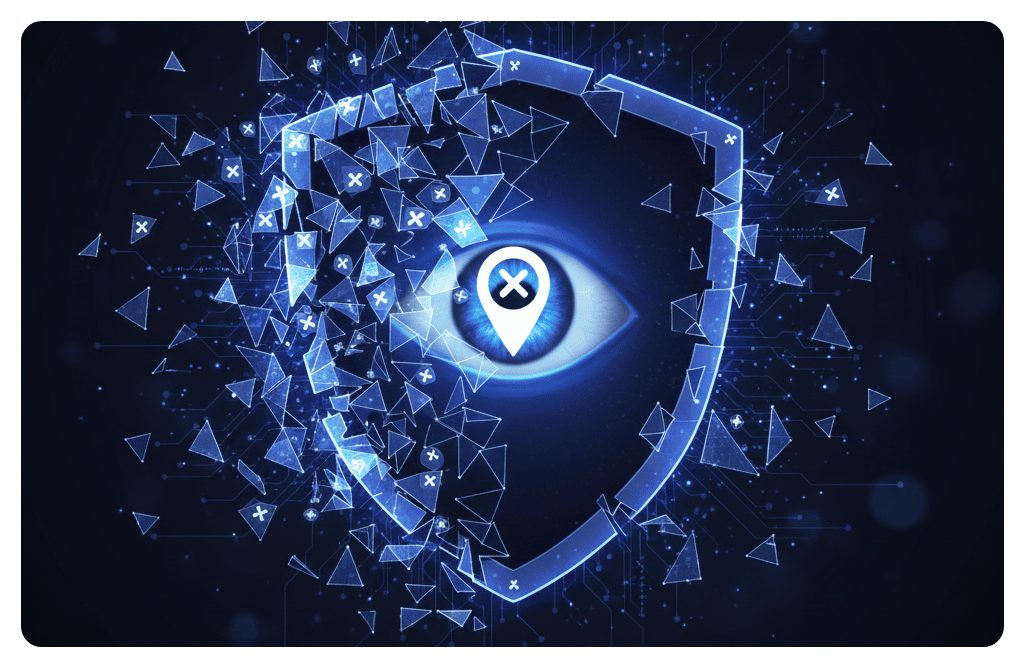
As X erupts with controversy and chaos from the messy rollout, the platform faces pressure to refine the feature. The immediate backlash has forced discussions about adding user controls and opt-in options to balance transparency with safety.
The New York Times coverage of the MAGA controversy highlights how this feature has become a flashpoint in broader debates about platform governance and accountability.
Users like @moltensnow captured the sentiment, noting the feature's potential to expose fraud while simultaneously creating new vulnerabilities. The India 100's analysis of foreign-operated political accounts demonstrates both the promise and peril of such radical transparency.
In summary, X's location feature embodies the platform's push for radical transparency, but at what cost?
While it exposes deceit in politics and marketing, the privacy fallout could reshape how brands engage KOLs, especially in crypto. As X refines the tool, the debate will rage on: Is this a step toward a more honest internet, or a risky overreach?
The Lever Bridge: Building Transparency & Trust in Web3 Marketing
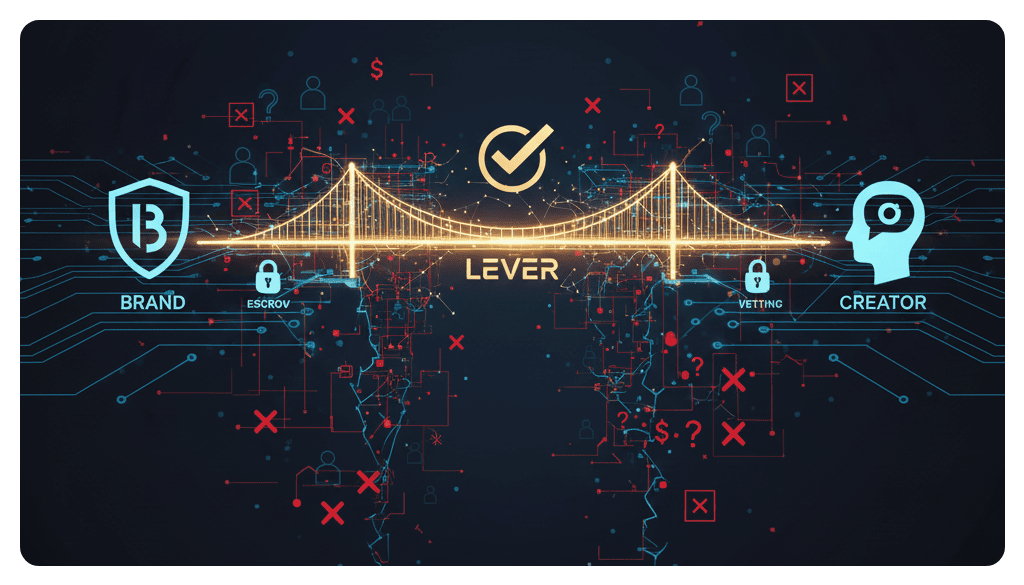
The challenges exposed by X's location feature included fake influencers, foreign bot farms, and pretenders manipulating their credentials, a few things that aren't new to Web3 marketers!
At Lever, we've been building toward a more transparent, accountable, and data-driven ecosystem since our inception.
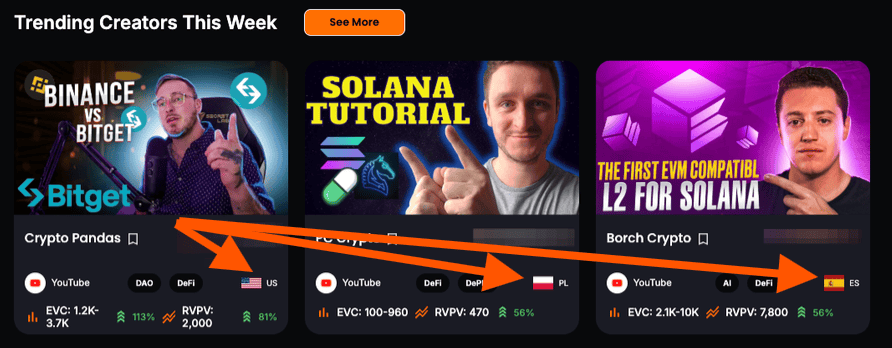
Location transparency has been baked into creator profiles from day one, because understanding who you're working with and where they operate is fundamental when allocating budgets, coordinating across time zones, or evaluating regional market influence.
Yet transparency by itself solves only half the problem. Web3 brands need more than visibility. They need a robust trust infrastructure between themselves and the creators they hire, and that's precisely the gap Lever bridges.
 Lever.io
A Trust Layer Between Brands & Creators
Escrow-secured payments guarantee creators receive compensation for approved deliverables while ensuring brands never risk transferring funds to unverified accounts or bad actors who disappear after payment.
Mediated dispute resolution provides an impartial mediator when disagreements arise. Lever intervenes based on documented deliverables and platform policies, protecting both parties from costly misunderstandings or fraudulent claims.
 Lever.io
Quality control and creator vetting maintain campaign standards by filtering out low-effort content producers and unqualified influencers before they can damage brand reputation or waste marketing budgets.
Comprehensive creator analytics, including historical performance metrics to verified audience demographics and engagement patterns, enable precise KOL selection based on authentic value, target market relevance, and genuine reach rather than inflated follower counts.
This infrastructure goes beyond typical influencer marketplaces. Lever functions as the trust layer that Web3 marketing has desperately needed.
Lever is a platform designed to make KOL partnerships reliable, measurable, and scalable in an industry historically plagued by scams and pretenders.
Ready to Work with KOLs Who Actually Deliver?
Partner with Lever and let us manage the entire workflow: creator identification and selection, contract negotiation, escrow management, timeline coordination, deliverable tracking, and full campaign execution.